Alberta’s government asked residents to complain about bike lanes. Here’s what rolled in.
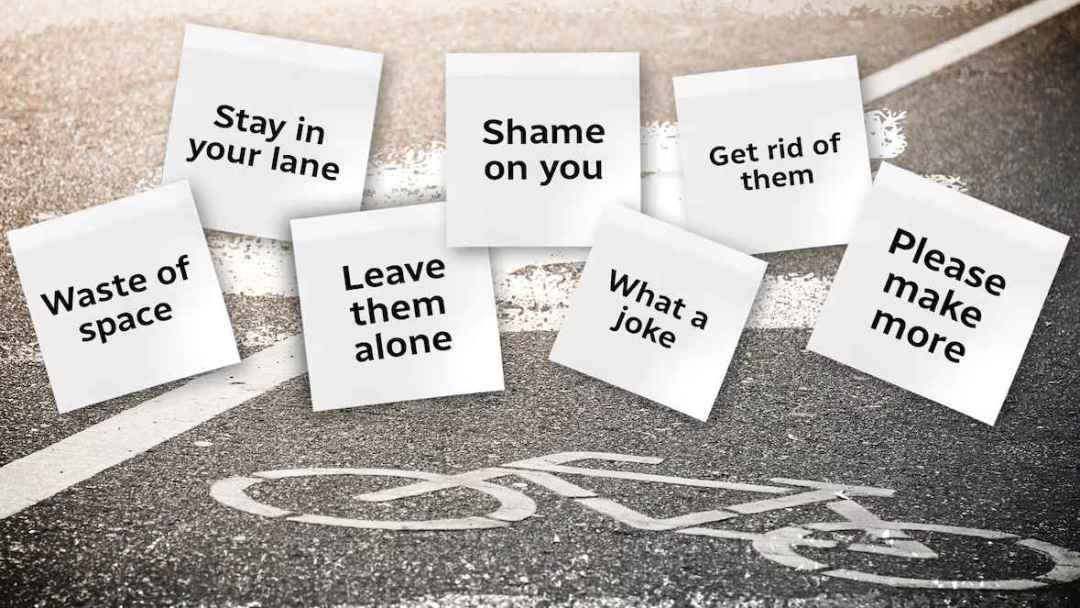 An Alberta government complaint portal about bike lanes attracted some critiques of specific lanes, but many Albertans used it to voice their support of bike lanes and tell the government to leave decisions about them to city councils. CBC News obtained submissions to the portal and an associated email address that were sent on July 15 — the day the web portal was announced — through an access to information request. The portal asked residents to list where they live, where the bike lane they are reporting is located and to share their concerns. Under a question about concerns with a specific bike lane, residents could choose from a drop-down menu of five options: “reduced parking,” “cost for taxpayers,” “not used,” “business/residential access concerns,” or “loss of vehicle lane increases traffic congestion and driving commute times.” Some submitted bogus bike lane locations to the portal, like “The Yellow Brick Road,” “Mordor,” “Under my wheels!” “123 fake street,” “Bike-lanes-are-the-best Avenue” and “Your mammas house.” Some “locations” included insults and profanity. Others listed the premier’s office or the Alberta Legislature Building. Devin Dreeshen, minister of transportation and economic corridors, told CBC News on Monday the government has received “tremendous feedback," with more than 14,000 submissions through the portal. Bikes lanes on Hermitage Road in Edmonton and 26th Avenue S.W. in Calgary drew the most complaints, he said. The minister said the province’s bike lane legislation is coming soon and his next step is to work with Edmonton and Calgary on dealing with bike lanes and traffic congestion. “Looking forward to sitting down with both municipalities to make sure that we can build bike lanes that make sense, that are smart, that obviously aren’t in places where we’re going to increase traffic congestion or remove parking or actually hurt response times for emergency vehicles to get around,” Dreeshen said. Both cities’ mayors have spoken against provincial control over bike lanes, with Calgary Mayor Jeromy Farkas calling the province’s focus on the issue “symbolic virtue-signalling” and Edmonton Mayor Andrew Knack saying removing lanes would be a waste of money. Hermitage Road and 26th Avenue S.W.All submissions mentioning bike lanes in northeast Edmonton on Hermitage Road were negative in tone. Complainants told the government they have concerns about the lanes going unused, taking away parking spots and backing up traffic. “Never used, posts and obstacles all over the road, feels unsafe,” wrote one complainant. “Should be a multi-use path on the side of the road like we have elsewhere. Current setup is a mess,” the Edmontonian added. Complainants also reported seeing cyclists riding on the street’s sidewalks instead of in the designated lanes. 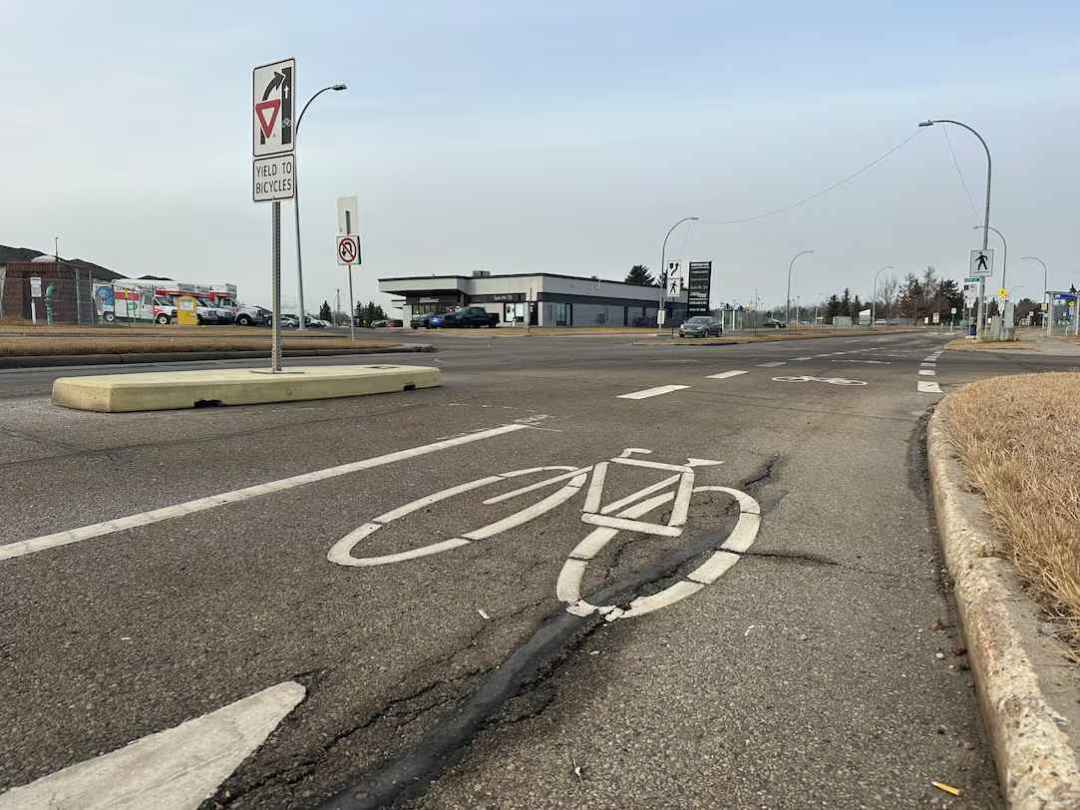 Concrete barriers and flexible posts separate bike lanes on Hermitage Road from vehicular traffic. (Madeleine Cummings/CBC) Aaron Paquette, the city councillor for Ward Dene, said in an email to CBC News his office usually receives a mix of positive and negative feedback about infrastructure changes and renewal but not in this case. He said he had his own concerns about the street from the beginning and continued to notice problems when he visited, from snowclearing not being done properly because of the infrastructure to people cycling and riding scooters on sidewalks. “We also spoke to avid cyclists living in the area who said improvements were needed for this project,” he said. Paquette said he encourages Edmonton’s city council to approve funding for changing the street’s layout. 26th Avenue S.W. in Calgary, on the other hand, drew more mixed feedback — at least in the batch of submissions CBC received. One resident complained to the province about the behaviour of cyclists using that lane. “We don’t need bike lanes but rather paid licensed bikers that abide by the rules of the road,” the complainant wrote. Multiple residents shared safety concerns about the street and mentioned a cyclist dying after being hit by a truck. One regular cyclist said the lane was unsafe because it was a painted line on the street, not a separated lane. Another complainant expressed concern about cyclists getting killed but felt removing parking spots for segregated bike lanes goes too far. ‘Stay in your lane’Many residents who submitted comments to the government, including some who said they were not fans of bike lanes, accused the province of interfering in municipal jurisdiction. Forty-four submissions included the phrase “stay in your lane.” “As a UCP voter, I’m beyond disappointed by this form of government overreach,” wrote one Edmonton resident, who said in an email their family will be unable to support the party if it proceeds with the proposed bike lane legislation. Another person who said they were a UCP voter wrote in an email that they commute on the 15th Avenue bike lane in Calgary. “If the provincial government continues to attack Calgarians through autocratic overreach into our city’s jurisdiction, I will be ensuring my friends, family, and myself will be doing everything in our power to put the New Democrats in charge,” that resident wrote. 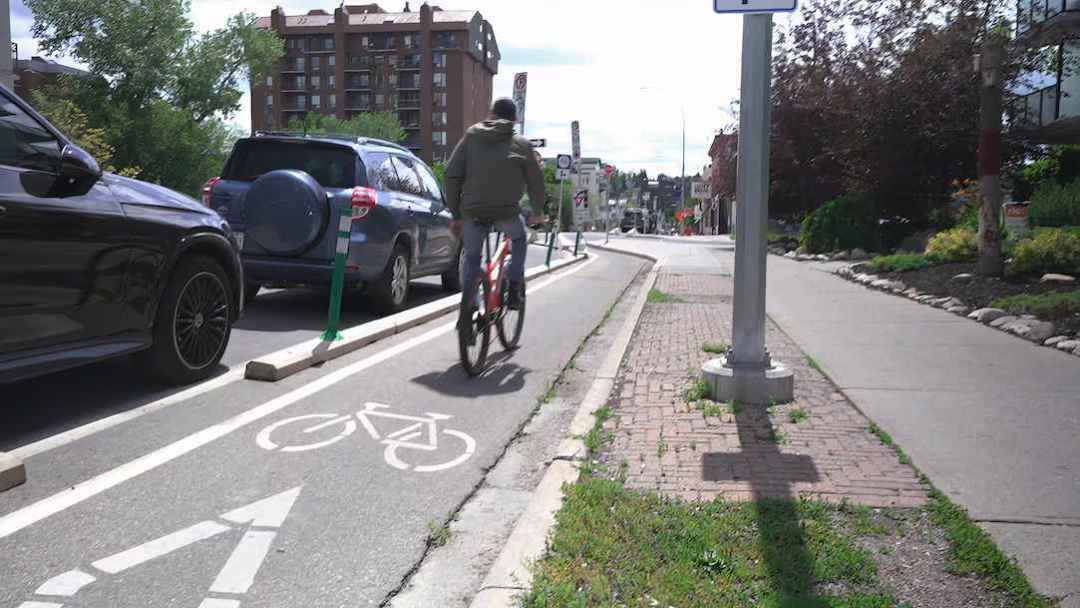 A cyclist uses a bike lane in Calgary. (Helen Pike/CBC) Though the majority of submissions mentioned Edmonton or Calgary, some Albertans from other cities and towns weighed in. “City bike lanes are none of the province’s business. You guys think you should control everything. Please stay out of this. It has nothing to do with you,” emailed one Medicine Hat resident who said they used to live in Calgary. “I think what this portal information shows is that there are a lot of voices who support bike lanes, who want to see that continue or if nothing else, who want municipalities to continue to have autonomy over our city streets,” said Anne Stevenson, the city councillor for Ward O-day’min in Edmonton. Critics slam portal designMany respondents criticized the portal’s structure, saying it was designed to receive only negative feedback about bike lanes. A researcher who said they have expertise in surveying who emailed the bike lane address said they were appalled by the “biased” form. Another emailer, who said they were a professional engineer involved in traffic management, said the survey was biased against bike lanes. “It is a self fulfilling survey model with an obvious ideology driving it,” the person wrote.  (Calgary) One Calgary group says the provincial web form that asks for concerns about bike lanes is focusing on the wrong issue. But a Killarney business owner says the portal is needed, arguing proposed bike lanes will hurt access to her business. Marcus Riedner, who lives on a farm near Didsbury, Alta., said he submitted “oodles” of comments through the portal — all supporting bike lanes. CBC initially asked for submissions over the course of one month, but narrowed the request to one day after the government estimated it would charge nearly $5,000 in fees to fulfil the request. CBC also asked for any reports created using the submissions. The government provided no reports summarizing results and withheld four pages of records, citing exemptions under the Access to Information Act. Riedner said it's unfortunate Albertans can't see the full scope of what was submitted. "They'll never give us the actual information," he said. By Madeleine Cummings ---------------- Signature: Website moderator. Feel free to contact me. Reply |