Alberta leading country in economic growth while rest of Canada stalls: report
ATB report points to tariffs, Iran war and separatism as possible risks. 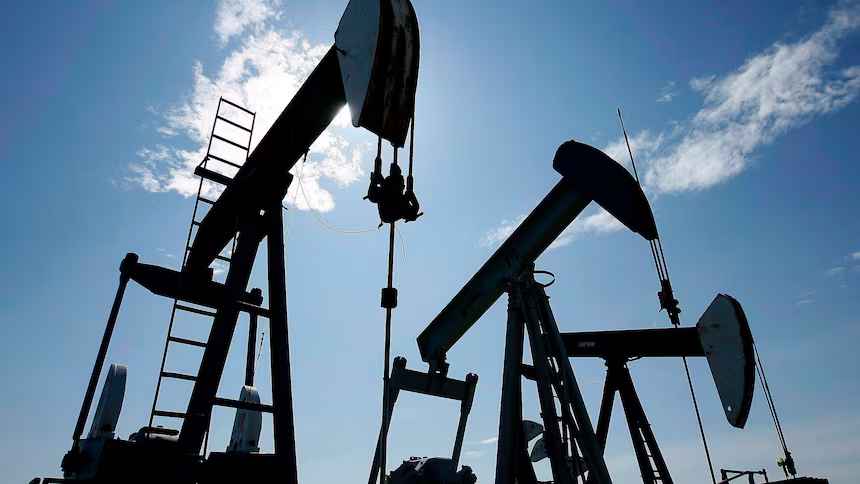 (According to ATB, Alberta is forecast to lead the country this year in employment and economic growth. Pumpjacks pump crude oil near Halkirk, Alta., June 20, 2007. )(Larry MacDougal/The Canadian Press) Alberta’s economy is staying the course despite uncertain tariff policies from the United States and the impact of the U.S and Israel-Iran war on global oil supply, according to a new report released Thursday. “Moving fast in the slow lane: Alberta’s economy in 2026 and 2027” is the latest quarterly economic report from ATB Financial. According to ATB, Alberta is forecast to lead the country this year in employment and economic growth. Real GDP growth is projected to be 2.6 per cent in 2026 and 2.4 per cent the following year. The Canadian economy is forecast to grow by 0.8 per cent in 2026 and 1.9 per cent in 2027. Alberta employment growth is forecast at 3.3 per cent in 2026 and 1.6 per cent in 2027. Alberta’s economic fortunes have long fallen and risen with the global price of oil. The province relies heavily on the resource sector for government revenue because it does not have a provincial sales tax. Not everything is rosy. Albertans are still struggling with food and energy costs, and youth unemployment is still high, the report notes. It also points to current investment uncertainty due to this fall’s referendum on Alberta’s future in Canada. The oil and gas industry is also in wait-and-see mode as it is watching for Alberta to submit a proposal for a new West Coast oil pipeline to Canada’s Major Projects Office by July 1. ATB chief economist Mark Parsons said while there is additional economic risk from tariffs and the negotiations to renew the Canada-United States-Mexico Agreement (CUSMA) this summer, approval of a pipeline from Alberta to the Pacific could be a huge boon for the Alberta economy.  (Mark Parsons is the chief economist for ATB Financial.) (Travis McEwan/CBC News) “We could go through a period of stronger growth,” he said. “But we're taking a more cautious approach. We don't want to build that in. “I think Albertans shouldn't necessarily bank on that happening, but it is something to watch for.” Impact of Strait of Hormuz closure The closure of the Strait of Hormuz due to the U.S and Israel-Iran war is expected to push Alberta’s benchmark oil price for West Texas Intermediate to an average of $84 U.S. a barrel this year, according to ATB Financial. The financial institution had predicted an average WTI price of $61 for 2026 back in its December 2025 report. The report forecasts a price of $70 U.S. a barrel in 2027, but only if the strait, through which about a fifth of the world's oil normally passes through, is reopened to tanker traffic. Despite these high prices, the report says oil companies are not spending on new projects aimed at expanding production. Instead they are focusing on efficiency by producing more from existing facilities. The provincial government announced last month it would go ahead with a non-binding referendum this fall on whether to stay in Canada or move towards a future vote on independence that would be binding. “According to the Alberta Chambers of Commerce, half of Alberta businesses say separation is a top issue facing the province, with the majority saying it’s impacting the economy,” the ATB report says. “Uncertainty of any form tends to weigh on business investment and overall economic activity.” Moshe Lander is a Calgary-based economist who teaches at Concordia University in Montreal. He said he believes the ATB report needs to be put into context. “Fantastic that Alberta is outpacing the rest of Canada, but that's not something to be proud of when Canada's at a standstill or maybe even a technical recession,” he said. “Any growth then will be seen as a positive, but that's by comparison only.” Lander said the effect of the separatism movement is also a concern for Alberta's economy. By Michelle Bellefontaine ---------------- Signature: Website moderator. Feel free to contact me. Reply |